
Every explanation for what happened in Ceuta last week is technically true and completely insufficient. A court ruling, a weak prime minister, an open-borders policy—none of it explains how 50,000 people turned up at a Spanish town in 48 hours.
Which begs the question: Which actors stand to benefit most?
THE SITUATION
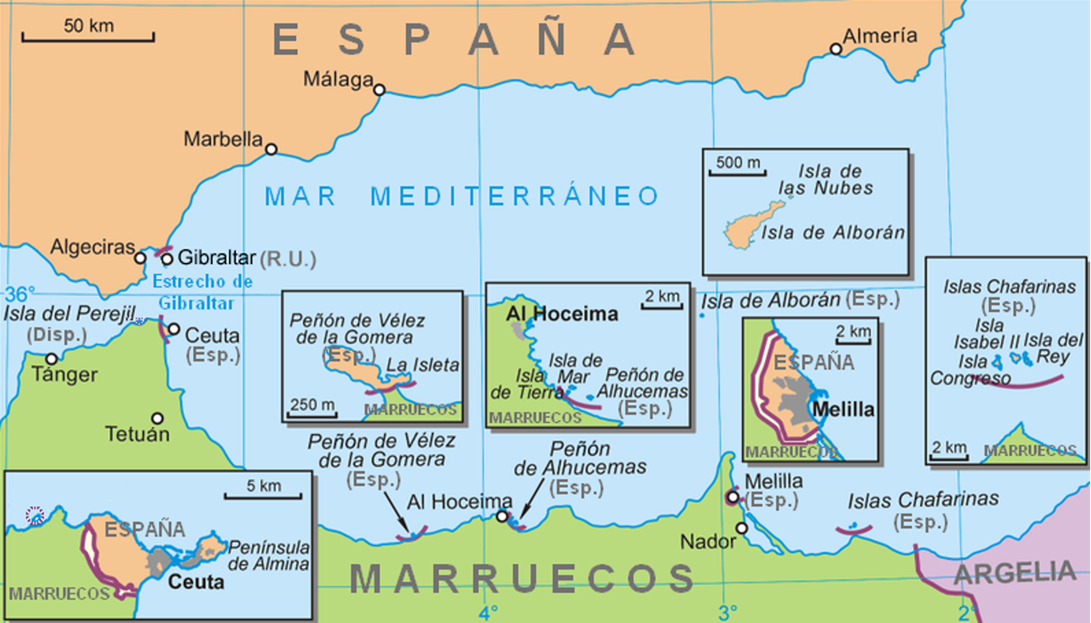
Over a span of two days last week, ~50,000 migrants invaded the Spanish town of Ceuta (population ~84,000). Ceuta is a Spanish exclave located across the Strait of Gibraltar. Along with the exclave of Melilla and a scattering of islets known as the plazas de soberanía, or “strongholds of sovereignty,” they represent the remnants of Spanish colonial control of the African side of the Mediterranean coast.
Morocco has never recognized Spain’s sovereignty over Ceuta or Melilla and, in the past, has used its geographic proximity to put political and diplomatic pressure on Spain. In May 2021, Morocco intentionally relaxed its border controls at Ceuta and Melilla to protest Spain, allowing the leader of the Polisario Front, Brahim Gali, to obtain medical care in Spain. This led to an influx of ~8,000 migrants and the deployment of the Spanish military.
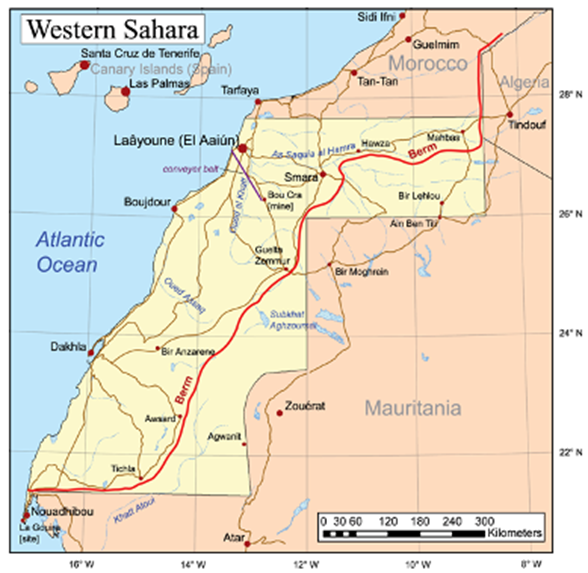
The Polisario Front is a story in itself. Morocco annexed two-thirds of Western Sahara—a former Spanish colony—in 1975; the US and Israel have since recognized its sovereignty there (after Morocco recognized Israel), though most countries, Spain included, have not. The territory matters economically: Morocco holds ~70% of the world’s known phosphate reserves, and Western Sahara accounts for roughly 10% of Morocco’s phosphate income.
Cui Bono?
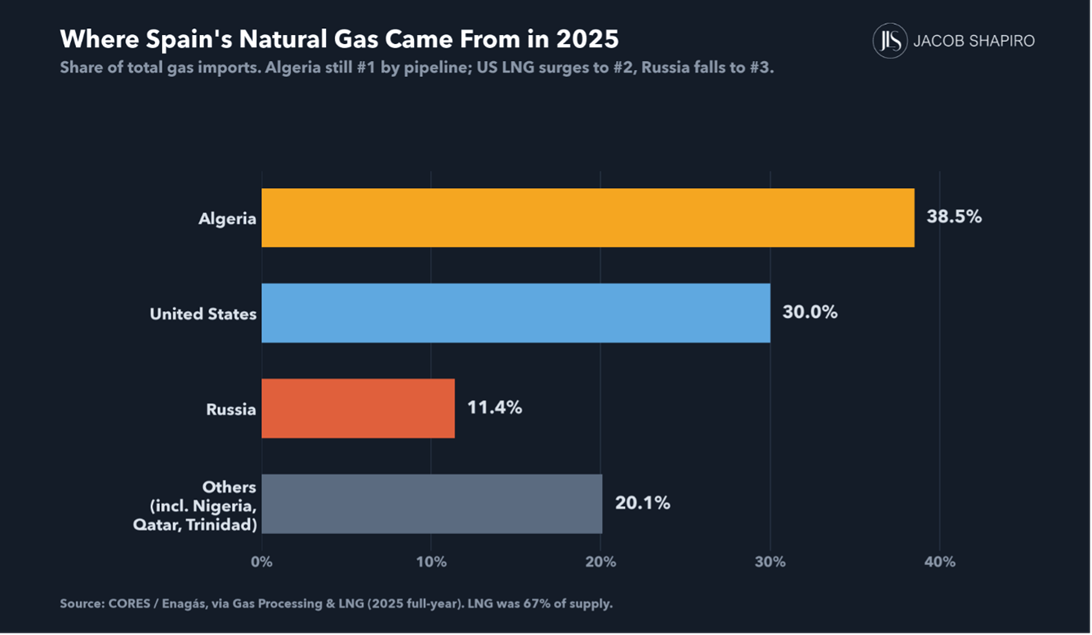
The problem: That story is a dead-end for explaining what happened in Cueta last week. Spain dropped its support for a referendum on Western Sahara’s future in 2022, backing instead a Moroccan proposal that would see Western Sahara retain autonomy under formal Moroccan sovereignty. The diplomatic shift caused a major problem with Algeria, which, aside from being the Polisario Front’s main supporter, accounted for ~40% of Spain’s natural gas imports in 2025.
Spain was willing to risk serious problems in its relationship with Algeria—which has allowed it to weather the Russia-Ukraine war far better than its fellow Eastern and Central European EU members—to repair its ties with Morocco.
Spain has not (yet) accused Morocco of complicity in last week’s far-larger influx. Prime Minister Pedro Sánchez visited Algeria in July, but there’s no sign Spain is rethinking Western Sahara—the two sides simply discussed “a mutually beneficial economic partnership.” The stated trigger is a Spanish Supreme Court ruling weeks ago barring the forced return of migrants arriving by sea at Ceuta and Melilla. Also at play: Sánchez’s pro-migration policies, which have drawn fire from Denmark to Italy. Spain has one of the EU’s lowest fertility rates at 1.1, and in January Sánchez pushed through a controversial amnesty for more than 500,000 illegal migrants.
And yet none of that explains how over 50,000 people crossed into Ceuta in two days. Even with Moroccan complicity in 2021, the figure maxed out at ~8,000. Local authorities had warned of the buildup for 10 days, with entries in the hundreds per day—a scale hard to pin on a court ruling and a weak prime minister chasing unorthodox growth. (Sánchez blames human traffickers for spreading false information about the ruling.)
I don’t know the answer, but “Conspiracy Jacob” would be remiss not to ask which actors benefit most from either a migration surge in Ceuta or the intra-European strife that follows.
The Third Rail of European Politics
And the latter is exactly what happened, which makes this more than a local story…
Italy suspended passport-free Schengen travel with Spain for a month, and Giorgia Meloni called for the suspension to be made indefinite. France tightened its border with Spain too. Non-neighbors like Denmark and Czechia agree the EU should weigh suspending Spain from Schengen altogether. Only Slovakia’s Robert Fico offered rare support, arguing that policing Europe’s borders is every country’s job.
This is classic European geopolitics. Even as member states rally around shared interests—defense self-sufficiency, backing Ukraine, holding the line against China on trade—migration, the third rail of European politics, rears its head again.
If the EU is to be stronger and more sovereign, migration policy cannot be left to bilateral bargains, nor can one member pursue policies so opposed to the rest. That incoherence is exactly what lets outside actors weaponize migration—just as Morocco did, to its benefit, back in 2021.
Europe’s Demographic Trilemma
The episode raises harder questions still. European population growth is in free fall: The EU’s total fertility rate was 1.34 in 2025, down sharply since the pandemic. European states also have more difficulty integrating migrants of different faiths and ethnicities. Muslims are ~5% of Spain’s population and Islam is its fastest-growing religion (no student of the region’s history should be surprised), with Muslim women’s fertility running 2–3X the native rate.
Official US national security policy now holds that Europe is in danger of “civilizational erasure” and “will be unrecognizable in 20 years or less.” The European right harps on the same loss of national distinctiveness. But here one has to at least sympathize with Sánchez: Like every aging society, Europe has three options—have more babies, accept more migrants, or build robots, Cylons, and replicants.
The first is basically impossible to compel by policy. The second is politically brutal—Sánchez has led a minority government since 2023 and likely won’t survive to the next election, due by summer. Migration brought down Angela Merkel and likely pushed Brexit over the line; the reaction to Ceuta shows why. Which leaves the Cylons. What could go wrong? Jokes aside, the EU isn’t at the frontier of robotics and automation—faster-aging societies like China, Japan, and South Korea have wrestled with this for decades and are further ahead.
There is, perhaps, a fourth path, though the EU may lack the stomach for it. Where 19th-century European imperialism extracted resources, a 21st-century version might extract people—luring the best and brightest from surrounding countries, or opening new markets in demographically growing regions that will buy BMWs and Louis Vuittons.
Fewer people needn’t mean slower growth, but for a generation the European economy’s beating heart has been the German export machine. Without export growth, Germany and its supply chains—already reeling from lost Russian energy and the intermittent closure of the Strait of Hormuz—face hard times ahead.
Why I’m Still Bullish Europe
My continued bullishness on Europe might come as a surprise, but much of that optimism rests on the idea that Europe’s problems are dire enough to eventually force the EU to trade high-minded virtue signaling for genuine, rapid change.
We already have a live example, sitting in the same gas statistics that run through this story. A few years ago, Spain drew a comfortable share of its gas from Russia; by 2025, the United States had quietly become its second-largest supplier at nearly one-third of imports, and Spain had cut Russian LNG purchases by 41% in a single year.
We’re constantly told Europe is too sclerotic and over-regulated to move quickly. The gas pivot is what happens when a real emergency—the weaponization of energy—removes the luxury of hand-wringing: Europe rewires critical supply chains in two years, pragmatically and without ceremony, because it has run out of alternatives.
Europe has wealth, human capital, deep institutions, and even geography on its side—but Ceuta reminds even the most rose-tinted analyst that without political cohesion and will, such strengths can be squandered.
MAP/CHART OF THE WEEK
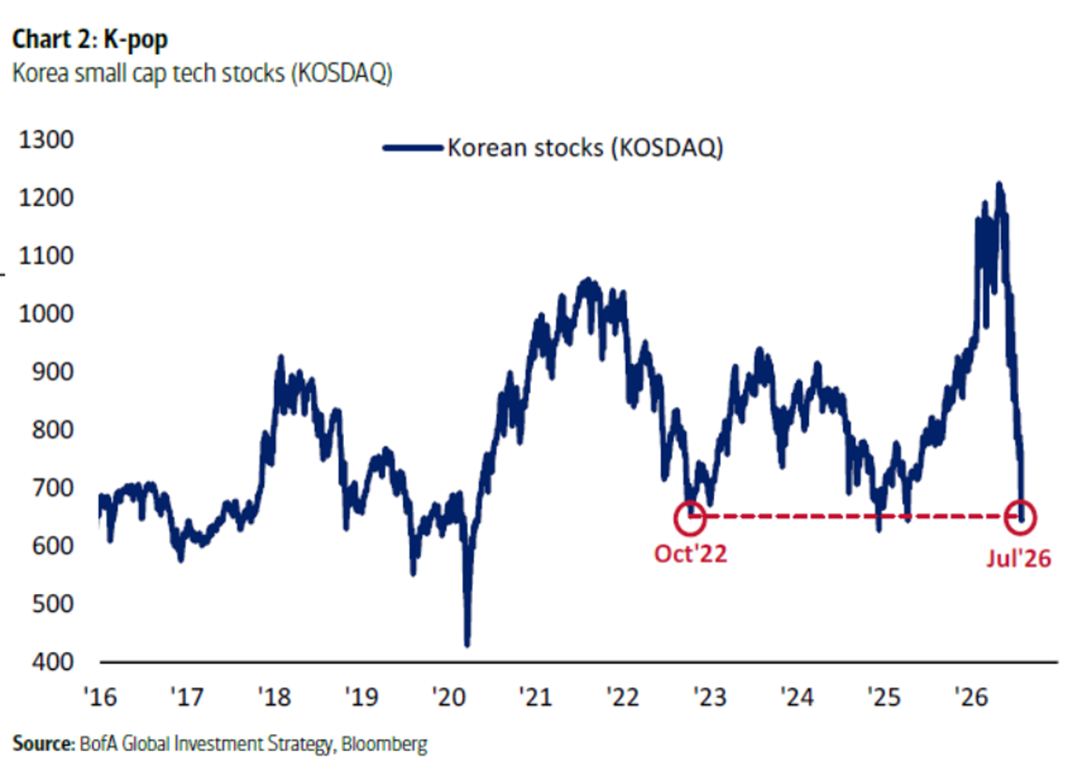
Korean equities are cheap again!
BLIND SPOT
US President Donald Trump blasted Chevron and Exxon earlier this week, demanding they cut the retail price of gasoline and accusing them of making too much money—and grumbling that Chevron’s CEO hadn’t shown adequate gratitude for his efforts to help the US oil industry.
Now imagine if the opening words were “US Representative Alexandria Ocasio-Cortez.” The media would be howling about her communist bona fides and her assault on American capitalism. Whinging that energy companies make too much money and demanding they price to the White House’s wishes amid a supply crunch is what you’d expect from a real socialist—like Brazil’s Luiz Inácio Lula da Silva, who engages in exactly this often and has held back his country’s economy in the process.
The irony: This administration has made fighting communism central to its foreign and domestic policy. Here’s Secretary of State Marco Rubio on July 22: “We’re certainly not going to allow communist efforts to undermine American society and drive wedges into our country.” Nice soundbite, but the communists have already breached the Rose Garden. How else to describe a government that takes stakes in some 30 companies, sells preferential access to the president via his meme coin, charges for faster access to his Truths, fires apolitical statisticians when the data displeases, and bullies companies into compliance?
Of course, I’m exaggerating. This isn’t real or principled communism, even if it shares some superficial features. It’s good old-fashioned populism—and for the last two presidential cycles, populism has been the only choice on the ballot. There are no free-market fiscal conservatives with much power in US politics these days.
I’ll be accused of bias for this section, so let me meet it head-on: To the extent I have a bias, it’s not against one side—it’s against the reality that there is only one side. Mamdani and Trump are two sides of the same coin; ditto J.D. Vance and AOC. Are we so blinded by our (historically justified) fear of communism that we can’t see that those screaming loudest about it look an awful lot like what they claim to oppose?
READER QUESTION
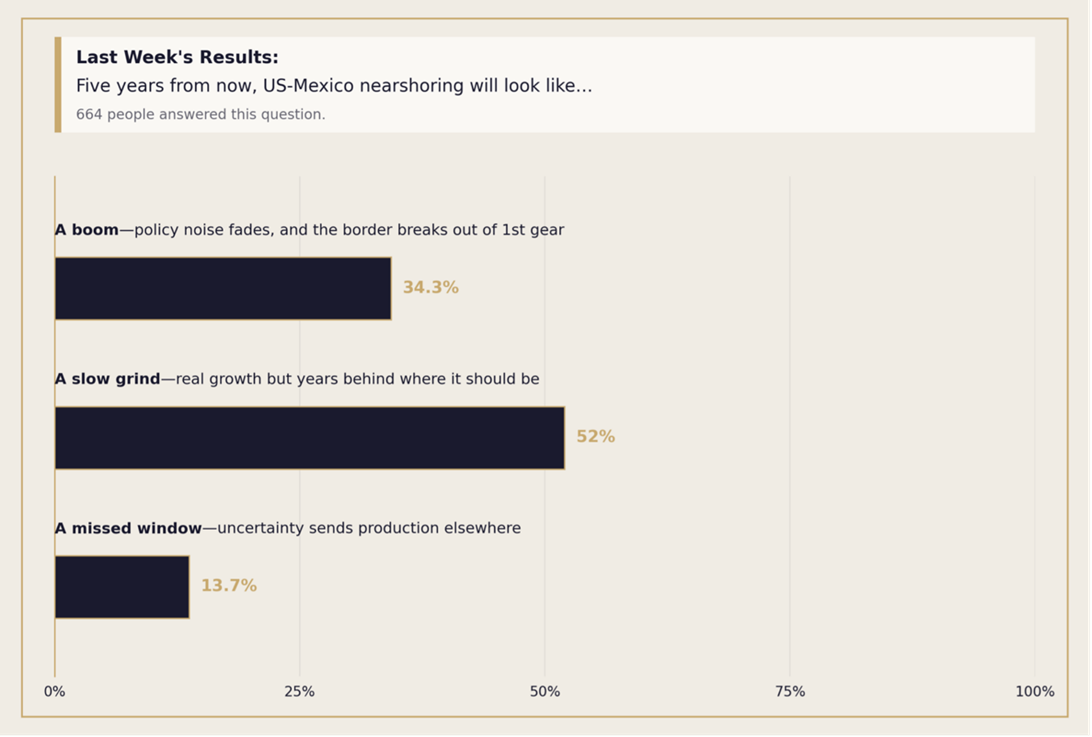
FINALLY...
What I’m watching: The American Revolution (Ken Burns)
What I’m reading: Towards a better characterisation of land degradation and desertification in the European Union
What I’m listening to: “Heath Hunter: How Money, Power and Private Equity Really Work,” The Vance Crowe Podcast
Bonus: Peter Zeihan, Marko Papic, Matt Gertken, and I recorded an in-person conversation—you can watch it here for free.

Jacob Shapiro
Geopolitical Analyst · Mauldin Economics
This article was originally posted here: https://www.mauldineconomics.com/the-world-isnt-ending/ceuta-migration-crisis-exposes-cracks
About the author