
asdasd
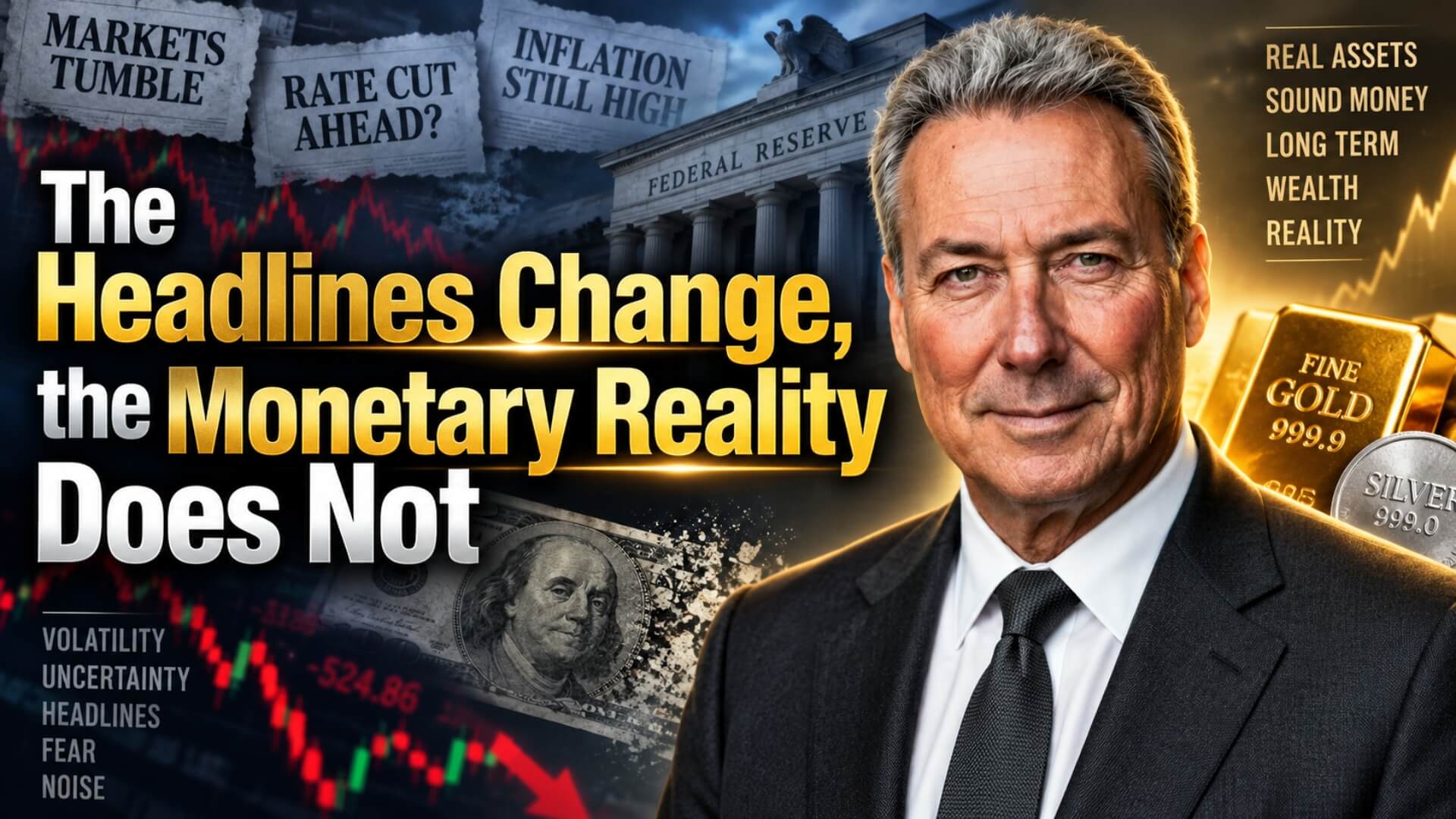
David Morgan’s weekly perspective focuses on the difference between short-term market volatility and the long-term monetary case for precious metals. Gold and silver initially came under pressure as the dollar and bond yields strengthened and expectations for a Federal Reserve rate increase climbed. But after Fed Governor Christopher Waller’s comments reduced expectations for an immediate hike, yields and the dollar retreated and precious metals rebounded sharply. Morgan argues that this illustrates how modern markets can reprice trillions of dollars based on changing probabilities and central-bank language, even while the underlying monetary structure changes far more slowly.
He also revisits gold’s performance relative to stocks, bonds, and real estate since 2000. While acknowledging that starting dates can influence comparisons, Morgan maintains that gold has ultimately outperformed the major asset classes over this period. More importantly, he argues that gold should not be evaluated like a stock because it produces no earnings or dividends. Its primary purpose is monetary insurance and protection against currency debasement, financial instability, growing government debt, and systemic risk. He believes the acceleration in gold since roughly 2022 may represent the later stages of a much larger monetary transition.
On silver, Morgan emphasizes that bearish price forecasts do nothing to solve the physical constraints facing the market. Prices can change instantly, but new mine supply takes years to develop because of declining grades, permitting difficulties, capital requirements, political risk, and long development timelines. This is pushing investors to pay closer attention to deposit quality, jurisdiction, management, and project economics.
Morgan also raises concerns about the growing tokenization of financial assets, including gold. A token may make gold easier to transfer, but it does not necessarily make ownership safer. Investors still need to know whether the underlying metal actually exists, whether it is allocated and independently audited, who controls custody, and what happens if an issuer, exchange, custodian, or technological system fails.
His central message is simple: do not let short-term price swings obscure the long-term purpose of owning precious metals. Physical gold and silver should primarily serve as financial insurance and capital preservation, while trading and speculation should remain separate. As Morgan puts it, own first, trade second, and never confuse volatility with invalidation.
Watch this video on The Headlines Change, the Monetary Reality Does Not, then please share with your friends and family on social media and use the caption: The Headlines Change, the Monetary Reality Does Not.
About the author


Seduced by silver at the tender age of 11, David Morgan started investing in the stock market while still a teenager. A precious metals aficionado armed with degrees in finance and economics as well as engineering, he created the Silver-Investor.com website and originated The Morgan Report, a monthly that covers economic news, overall financial health of the global economy, currency problems ahead and reasons for investing in precious metals.
David considers himself a big-picture macroeconomist whose main job as education—educating people about honest money and the benefits of a sound financial system—and his second job as teaching people to be patient and have conviction in their investment holdings. A dynamic, much-in-demand speaker all over the globe, David’s educational mission also makes him a prolific author having penned "Get the Skinny on Silver Investing" available as an e-book or through Amazon.com. As publisher of The Morgan Report, he has appeared on CNBC, Fox Business, and BNN in Canada. He has been interviewed by The Wall Street Journal, Futures Magazine, SilverSeek and numerous other publications. Additionally, he provides the public a tremendous amount of information by radio and writes often in the public domain.
Website: http://www.themorganreport.com
Second Chance Book: http://www.thebooksecondchance.com
The Silver Manifesto: http://www.thesilvermanifesto.com
Blog: http://www.silver-investor.com/blog
Twitter: http://twitter.com/silverguru22