
Strengths
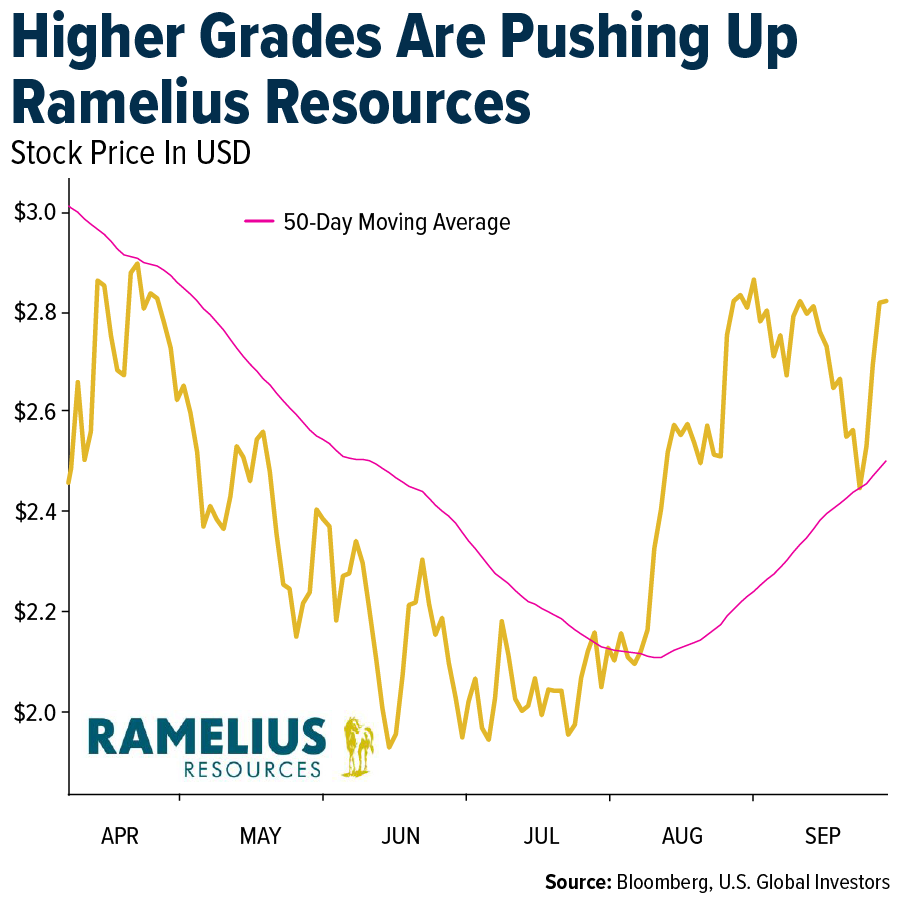
- The best-performing precious metal for the past week was platinum, but still down 1.62%. Ramelius Resources raised its FY27–FY30 production outlook by approximately 5%, with FY30 production now expected to reach 560,000–610,000 ounces, up 11% from its previous 500,000–550,000-ounce range. The higher forecast is primarily driven by improved grades at Mt Magnet. AISC and growth capex were also revised higher by 16% and 14%, respectively, according to Goldman Sachs.

- Gold demand remains resilient despite higher yields and a stronger U.S. dollar. Investor demand remains robust, supported by continued ETF inflows, while physical demand is strengthening in India as local market discounts narrow amid resilient wedding-related demand. Chinese imports, ETF buying and futures activity also point to healthy underlying investment demand, according to BMO.
- Chinese gold imports surpassed 1,000 tons through August, already exceeding the full-year 2025 total and marking the highest level for the period in data going back to 2017. A stronger yuan has also created favorable conditions for imports by lowering the local cost of dollar-denominated gold, according to Zijie Wu at Jinrui Futures.
Weaknesses
- The worst-performing precious metal for the past week was silver, down 3.58%. Shandong Gold Mining lowered its 2026 gold production target to 36–38 tonnes from at least 49 tonnes previously, citing stricter safety requirements. Full-year production is now expected to fall below the 48.89 tonnes produced in 2025, while both net income and operating income are projected to decline year-over-year.
- Political and security risks intensified across West Africa’s gold mining sector. Mali’s security environment deteriorated sharply in early 2026, while Zijin Mining’s attempted takeover of Allied Gold collapsed in July. Meanwhile, resource nationalism has intensified in Burkina Faso, where the state is now the majority owner of six of the country’s 15 active gold mines, highlighting growing political and operational risks for miners across the region, according to RBC.
- Kinross’ 2026–2027 production guidance was revised down 8% to 1.84–1.86 million ounces, reflecting operational challenges at La Coipa, including winter weather and recovery issues, as well as lower grades, mining rates and recoveries at Round Mountain. AISC guidance was also increased by 5%, according to RBC.
Opportunities
- Midtier gold producers could increase production by approximately 80% through 2030, while senior producers continue to face challenges replacing depleted reserves. With leading senior miners holding roughly $26 billion in cash, consolidation pressure across the gold sector is expected to remain elevated, according to Bloomberg Intelligence.
- Elemental Royalty agreed to acquire five royalties and streams from Orion Mine Finance for $290 million, adding interests in producing and advanced-development gold and silver assets. The transaction is expected to contribute approximately 1,500 gold-equivalent ounces in 2026, prompting the company to raise 2026 guidance to 19,500–22,000 GEOs. Elemental also increased its average production guidance for 2030–2032 to 52,000 GEOs, according to CIBC.
- Artemis Gold entered into a definitive agreement to acquire Vista Gold, owner of the Mt. Todd gold project in Australia’s Northern Territory, in an all-stock transaction valued at approximately $427 million. The deal represents a 25% premium to Vista’s last closing price and values the company at approximately $82 per reserve ounce, less than one-tenth the average for midtier producers, according to Bloomberg Intelligence.
Threats
- Elevated gold equity valuations could limit further upside without additional gains in bullion. Senior gold producers are trading at a forward 12-month FCF/EV yield of 6.3%, while royalty companies trade at a CF/P yield of 4.0%. Based on mid-cycle valuations, RBC estimates that current equity prices imply gold prices of approximately $4,425 per ounce for senior producers and $4,450 per ounce for royalty companies, suggesting further equity upside may depend on continued gold price appreciation.
- Higher Treasury yields and hawkish Fed expectations are pressuring gold prices. Gold fell to as low as $4,244.57 per ounce on September 24, extending its recent decline, while front-month futures posted a fourth consecutive losing session. Treasury yields above 5%, a stronger U.S. dollar and rising expectations for an October Fed rate increase are creating near-term pressure for the non-yielding metal.
- Russia’s Finance Ministry proposed a 20% windfall tax on gold miners’ additional income generated by higher global gold prices in ruble terms compared with 2025. The measure targets what the government considers additional “rent income” as it seeks to contain a widening budget deficit amid heavy military spending and weaker oil revenues.
About the author
