
Strengths
- The best-performing precious metal for the past week was platinum, though it was still off 1.30% and roughly in line with gold’s price this week. Continued gold ETF inflows signal resilient investor demand. Investors remain willing to add gold exposure during periods of price weakness, with continued ETF inflows reflecting persistent concerns over currency intervention, fiscal sustainability and the long-term purchasing power of fiat currencies, according to BMO.
- China accelerates gold purchases as central bank demand remains strong. The People’s Bank of China added 650,000 troy ounces of gold to its reserves in August, its largest monthly purchase since late 2023 and the 22nd consecutive month of buying. China’s official gold holdings reached 76.73 million troy ounces, with 3.93 million troy ounces added since the current buying streak began in November 2024.
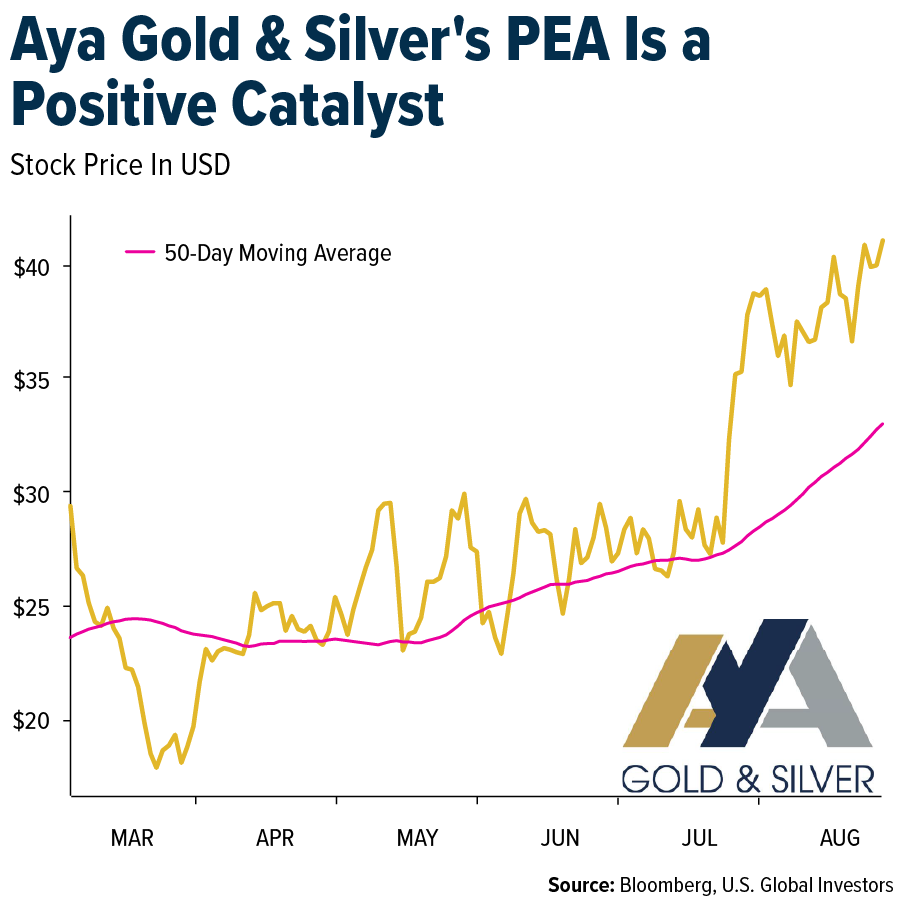
- Aya Gold & Silver’s Boumadine PEA highlights robust project economics. Aya Gold announced an updated Preliminary Economic Assessment for its Boumadine project, estimating an after-tax NPV5% of $3.5 billion and an IRR of 93%, based on gold at $3,500 per ounce and silver at $50 per ounce. The NPV significantly exceeds Street consensus of $1.5 billion, according to CIBC.

Weaknesses
- The worst-performing precious metal for the past week was palladium, down 6.15%, perhaps due to reduced economic activity amid the surge in interest rates. Gold heads for a third consecutive weekly decline. Gold rose as much as 1% to $4,360 per ounce on Friday but remained on track for a third straight weekly loss, highlighting continued near-term pressure on the precious metal despite the latest rebound, according to Bloomberg.
- West African Resources’ net profit falls short of expectations on higher tax expenses. West African Resources reported consolidated net profit of A$437 million, below consensus expectations of A$504 million, primarily due to A$118 million in withholding taxes on substantial intercompany dividends paid by its Burkina Faso subsidiaries, according to Canaccord. The biggest question now is whether the A$118 million charge was primarily a one-time consequence of a large dividend repatriation or whether it represents a recurring structural tax cost on future cash transfers.
- Platinum market shifts to surplus as investment and Chinese jewelry demand weaken. The World Platinum Investment Council now expects a surplus of 265,000 troy ounces in 2026, reversing its previous forecast for a deficit of 297,000 troy ounces and ending three consecutive years of market deficits. Investor selling and weaker Chinese jewelry demand are driving the shift, while platinum prices have fallen more than a third from their January record near $3,000 an ounce, according to Bloomberg.
Opportunities
- Jeff Currie sees Treasury buybacks as a long-term bullish signal for gold. Former Goldman Sachs commodities chief Jeff Currie described Treasury Secretary Scott Bessent’s Treasury buyback policy as “financial repression” and the “ultimate buy signal” for gold, arguing that the policy strengthens the long-term investment case for gold and other hard assets.
- Eldorado Gold reaches key milestone at Skouries ahead of commercial production. Eldorado Gold produced its first copper-gold concentrate at the Skouries project on September 8, keeping the project on track for commercial production in Q4 2026. BMO sees the ramp-ups at Skouries and McIlvenna Bay, alongside additional catalysts across the company’s portfolio, as potential drivers of further upside for investors.
- Lingbao Gold expands in Papua New Guinea with $453 million Simberi acquisition. Lingbao Gold agreed to acquire St Barbara’s Simberi Island gold assets in Papua New Guinea for $453 million. The deal forms part of a broader expansion by the state-backed group, which is investing more than $1 billion in mining and port assets across three PNG islands, largely through acquisitions from Australian companies, according to the Australian Financial Review.
Threats
- Gold’s growing reliance on rate-sensitive ETF demand raises correction risk. Central bank buying has narrowed, while rate-sensitive ETF demand has become a more important driver of gold prices, according to JPMorgan. Roughly $7 billion has flowed into GLD over the past two months, the largest inflow since November 2025, increasing the risk that a repricing of interest-rate expectations could trigger ETF outflows and amplify a correction in gold prices.
- Higher gold prices trigger selling among Turkish investors. Turkey’s total gold holdings fell by eight tonnes in August, the largest monthly decline since November 2021, bringing the country’s gold stock to 4,305 tonnes. QNB economists said domestic investors may have viewed elevated gold prices as a selling opportunity, although holdings remain 95 tonnes higher year-over-year, according to Bloomberg. Turkey typically uses its gold sales to counter undesirable moves in the lira.
- Hotter U.S. inflation raises the risk of tighter-for-longer monetary policy. A hotter-than-expected U.S. PPI reading pushed gold lower on September 10 as investors reassessed the outlook for Federal Reserve policy. Persistent inflation could keep interest rates elevated for longer, supporting real yields and the U.S. dollar and potentially reducing investor demand for gold.
About the author
