
On November 27, US regulators closed United Fidelity Bank, a privately owned community bank with roughly $6B in assets, making it the largest US bank failure since April 2024. Importantly, this failure appears to be quite different from that of SVB, which was largely driven by interest-rate risk and a deposit run. United Fidelity is a classic example of an ugly balance sheet and weak risk management.
Those who have been following our banking articles and, in particular, our recent “Don’t Bank On It” series should find this case particularly interesting. Many of the risks we have been highlighting in the balance sheets of publicly listed US banks have now materialized in this bank.
Extremely high concentration in CRE
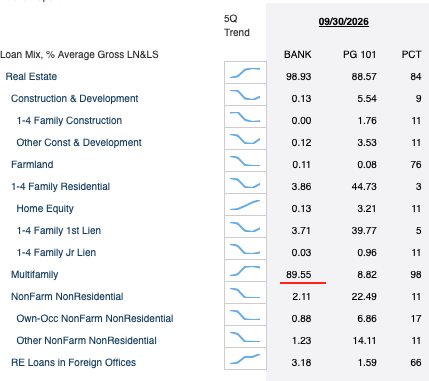
United Fidelity was essentially a highly leveraged multifamily real estate lender operating as a bank. Multifamily loans alone accounted for roughly 90% of its entire loan portfolio.
Importantly, non-owner-occupied CRE, one of the riskier credit segments, amounted to more than 740% of Tier 1 capital plus loan-loss reserves, compared with a peer average of 200%.
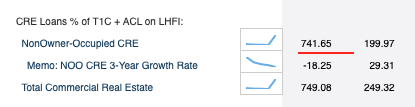
As we have repeatedly highlighted in our banking articles, with such a high concentration relative to capital, a bank does not necessarily need a major economic crisis to get into serious trouble.
From almost no problem loans to 70% NPLs in just one quarter
Perhaps the most shocking part of this bank failure is how rapidly reported asset quality deteriorated.
As of 2Q26, United Fidelity reported an NPL ratio (loans 90+ days past due or on nonaccrual) of less than 0.5%. Just three months later, this ratio exceeded 70%.
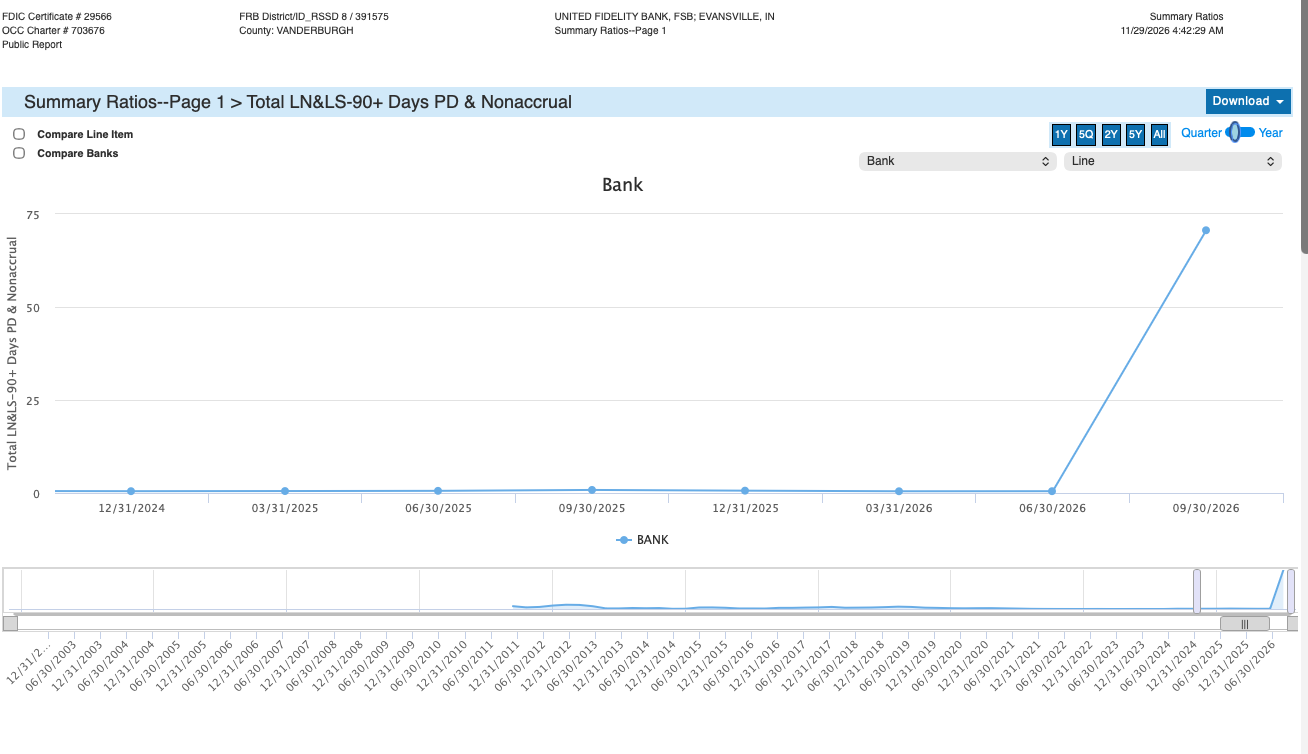
Needless to say, it seems highly unlikely that all the underlying credit problems emerged in just three months. This raises serious questions about the timely recognition of problem loans.
This is precisely why we have repeatedly argued that low reported NPL ratios can provide false comfort, particularly for banks with highly concentrated and complex loan portfolios. The case raises the question of whether “extend and pretend” played a role. If similar practices are being used at other banks, they could eventually lead to major credit problems there as well.
Capital and loan-loss reserves proved insufficient
The bank recorded massive loan-loss provisions, with annualized provisions reaching roughly 6% of average assets.
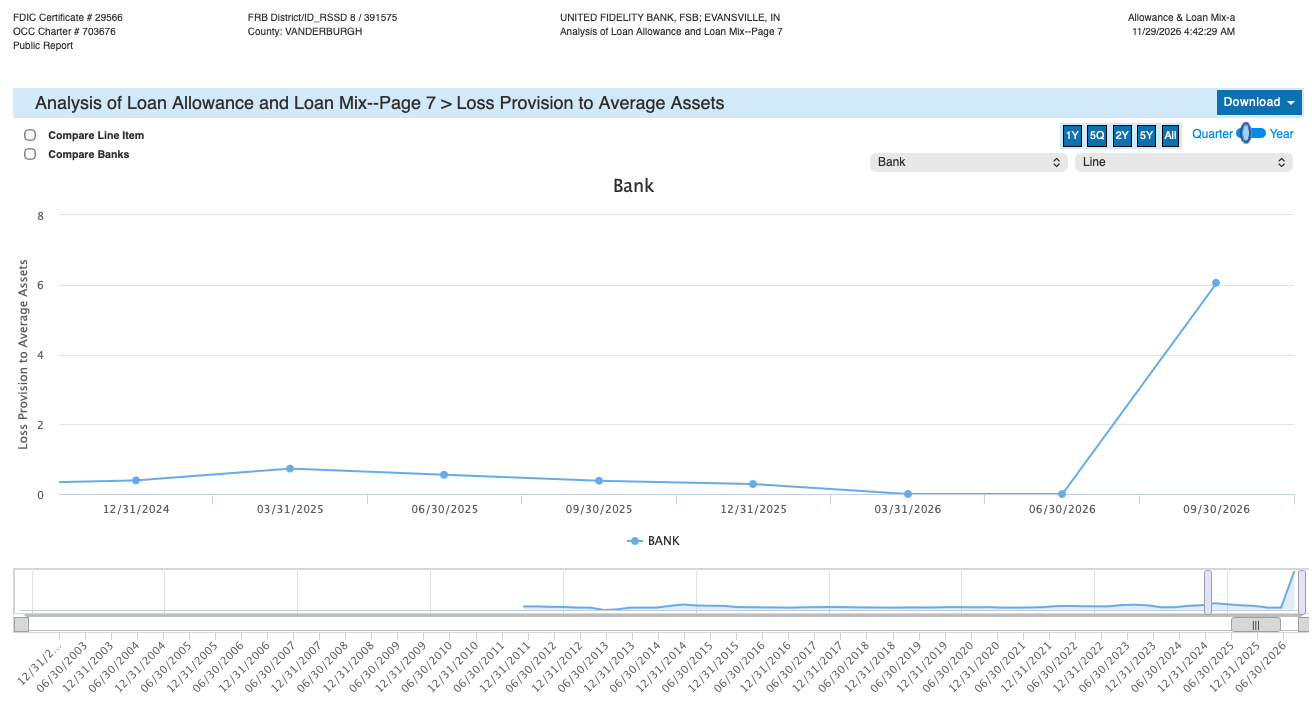
Despite these massive charges, the bank was left with roughly $2.2B of nonperforming loans and just $6M of loan-loss reserves. Its CET1 ratio fell to less than 5%.
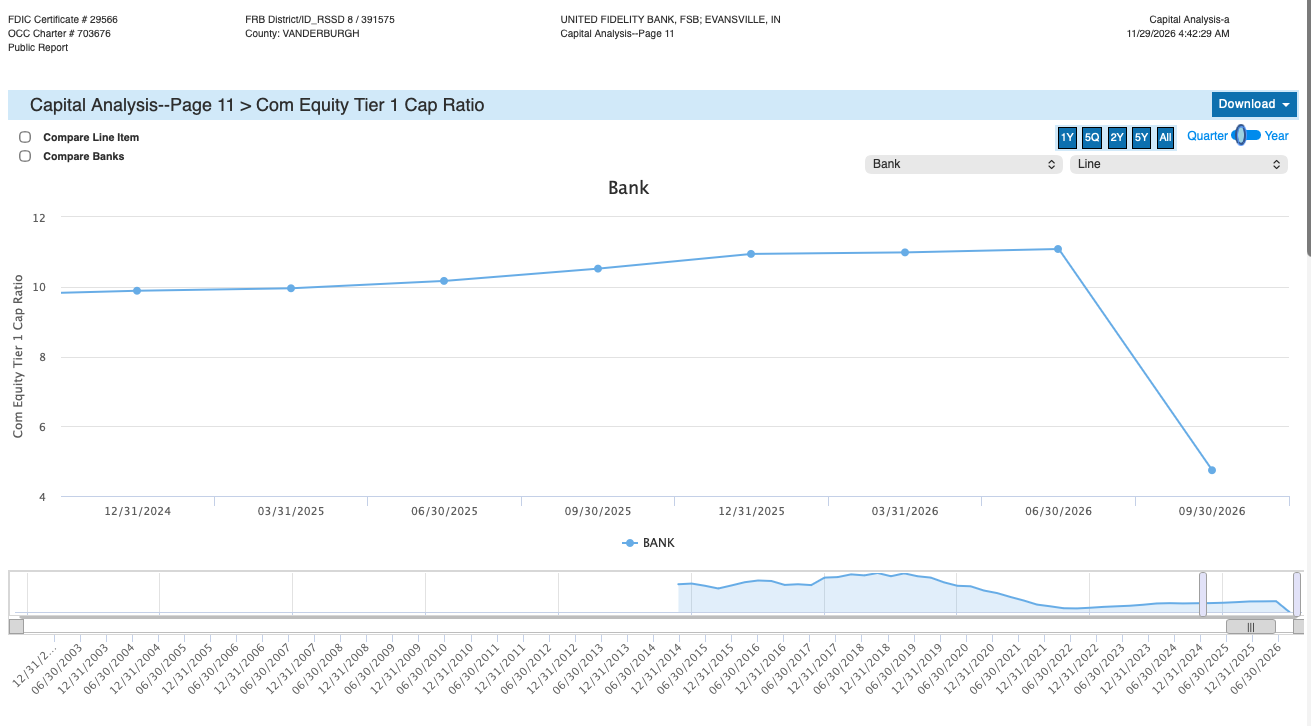
This is another example of how quickly a bank can burn through its capital when its loan book is so concentrated.
Why this case is relevant to the banks we have highlighted
In our recent banking articles, we have highlighted several publicly listed US banks where exposure to CRE, shadow banks or other risky credit segments amounts to several hundred percent of their CET1 capital.
In some cases, reported asset quality remains relatively good, which many investors interpret as evidence that these exposures are manageable.
However, United Fidelity is a particularly extreme example of why this argument can be dangerous. Reported problem loans may remain low for a long time, while the underlying credit risks continue to accumulate.
Of course, we are not suggesting that all the banks we have highlighted will experience anything close to what happened at United Fidelity.
However, the key point is that reported NPL ratios tell us about recognized credit problems, not necessarily the full extent of the risks sitting on a bank’s balance sheet.
For highly concentrated lenders, by the time these risks become fully visible in reported asset-quality ratios, it may already be too late.
Implications for the FDIC
Even though substantially all of the failed bank’s assets and deposits are being taken over by another bank, the FDIC still expects the failure to cost its Deposit Insurance Fund (DIF) roughly $1.83B, equivalent to more than 30% of the failed bank’s total assets and 1.1% of the DIF balance as of September 30. Had the FDIC been forced to liquidate the bank’s assets rather than sell them to another bank, the losses could have been even higher. More importantly, United Fidelity accounted for less than 0.03% of total US banking assets, yet the estimated cost of its failure alone amounts to 1.1% of the DIF. This shows how disproportionate the losses can be relative to the size of a failed bank.
Bottom line
Believe it or not, there are more major issues on the larger bank balance sheets as compared to smaller banks, which we have covered in past articles. Moreover, consider that there was one major issue which caused the GFC back in 2008, whereas today, we currently have many more large issues on bank balance sheets. These risk factors include major issues in commercial real estate, rising risks in consumer debt (approaching 2007 levels), underwater long-term securities, over-the-counter derivatives, high-risk shadow banking (the lending for which has exploded), and elevated default risk in commercial and industrial (C&I) lending. So, in our opinion, the current banking environment presents even greater risks than what we have seen during the 2008 GFC.
Almost all the banks that we have recommended to our clients are community banks, which do not have any of the issues we have been outlining over the last several years. Of course, we're not saying that all community banks are good. There are a lot of small community banks that are much weaker than larger banks. That’s why it's absolutely imperative to engage in a thorough due diligence to find a safer bank for your hard-earned money. And what we have found is that there are still some very solid and safe community banks with conservative business models.
So, I want to take this opportunity to remind you that we have reviewed many larger banks in our public articles. But I must warn you: The substance of that analysis is not looking too good for the future of the larger banks in the United States, and you can read about them in the prior articles we have written.
Moreover, if you believe that the banking issues have been addressed, I think that New York Community Bank is reminding us that we have likely only seen the tip of the iceberg. We were also able to identify the exact reasons in a public article which caused SVB to fail. And I can assure you that they have not been resolved. It's now only a matter of time before the rest of the market begins to take notice. By then, it will likely be too late for many bank deposit holders.
At the end of the day, we're speaking of protecting your hard-earned money. Therefore, it behooves you to engage in due diligence regarding the banks which currently house your money.
You have a responsibility to yourself and your family to make sure your money resides in only the safest of institutions. And if you're relying on the FDIC, I suggest you read our prior articles, which outline why such reliance will not be as prudent as you may believe in the coming years, with one of the main reasons being the banking industry’s desired move towards bail-ins. (And, if you do not know what a bail-in is, I suggest you read our prior articles.)
It's time for you to do a deep dive on the banks that house your hard-earned money in order to determine whether your bank is truly solid or not. You can feel free to review our due diligence methodology here.
About the author
