
Strengths
- The best performing precious metal for the past week was palladium, up 1.99%. The U.S. determined that Russia has been selling palladium below fair market value while subsidizing producers, and responded with import taxes exceeding 240%, effectively shutting Russian supply out of the U.S. market. While the ruling is not yet permanent pending further review, the duties are already being collected, making the restrictions effectively active.
- World Gold Council reported first quarter 2026 demand, with its Gold Demand Trends showing a 42% year-over-year increase in bar and coin demand, led by Asia. Central bank demand rose 3% year-over-year to 244 tons, despite softer data earlier in the quarter, while exchange-traded fund (ETF) inflows fell 73% year-over-year and jewelry demand declined 23% year-over-year. Overall, global gold demand increased 2% year-over-year to 1,231 tons.
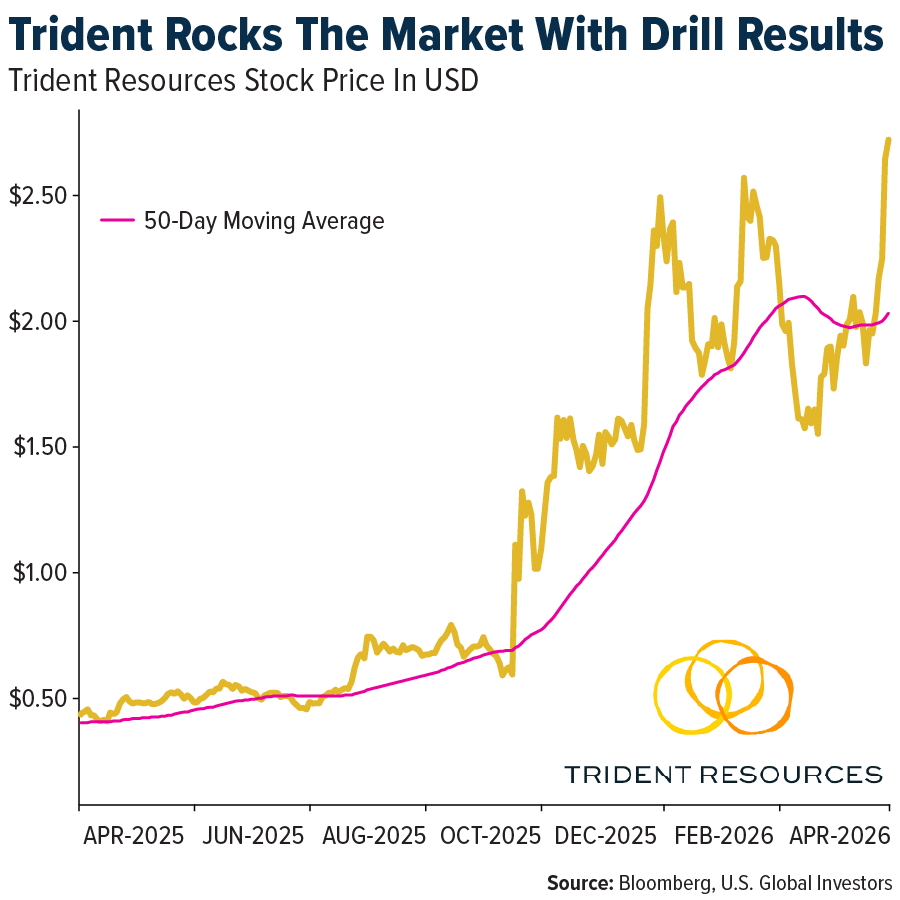
- Trident Resources reported its strongest drill result to date at the Contact Lake gold project in Saskatchewan, with 15.11 grams per ton gold over 51.83 meters, along with additional intercepts including 5.07 grams per ton over 21.50 meters. Despite a pullback in gold prices, high-quality exploration results continue to attract investor interest, particularly for projects with strong resource potential and expansion upside.
Weaknesses
- The worst performing precious metal for the past week was gold, down 2.52%. Gold extended its decline as investor focus remained on potential talks between the U.S. and Iran, while the continued closure of the Strait of Hormuz heightened inflation concerns, according to Bloomberg.
- Chinese nationals, backed by Zimbabwean army soldiers, have illegally seized over 500 hectares of ancestral land in Chimanimani for riverbed gold mining, displacing nearly 3,500 families despite a government ban. Authorities have remained largely silent, raising concerns about high-level protection. Environmental damage has spread across borders, with polluted water flowing into Mozambique and increasing tensions in downstream communities.
- Queensland’s Ravenswood gold mine is nearing receivership after its four derivative counterparties—HSBC, Macquarie, ING, and Natixis—terminated gold hedging contracts following missed mid-April payments. Restructuring firms KordaMentha and FTI Consulting are expected to be appointed. The situation highlights the risks of poorly executed hedging strategies, as owners EMR Capital and Golden Energy and Resources face losses despite strong gold prices.
Opportunities
- Barrick Mining Corporation said it plans to list its North American operations in New York and remains on track to complete the initial public offering (IPO) by year-end. The world’s third-largest gold producer is pursuing the IPO as part of a strategic reset following operational setbacks and a management shakeup, including the departure of longtime CEO Mark Bristow, according to Bloomberg.
- Canada will create its first sovereign wealth fund to finance large infrastructure projects, Prime Minister Mark Carney said. The fund will also allow individual Canadians to contribute, confirming earlier media reports.
- Torex Gold Resources reported strong exploration results at its Media Luna cluster and ELG Underground mine, with drilling supporting resource expansion and continued high-grade mineralization. The results point to potential resource upgrades and longer mine life. Despite trading at a discount to peers—0.41x price-to-net asset value (P/NAV) and 2.8x 2026 estimated enterprise value to EBITDA (EV/EBITDA) versus 0.54x and 5.8x—Desjardins rates the stock a Buy with a C$105 target, citing ongoing drilling and early-stage targets as catalysts.
Threats
- United States Mint sells more than $1 billion of investment-grade gold coins annually, each stamped with symbols like the bald eagle and marketed as 100% American gold. However, a The New York Times investigation found the program may rely on foreign gold, including illegally mined supply, raising concerns about sourcing transparency.
- India’s gold imports are set to fall to roughly 15 tonnes in April, a near 30-year low, after banks halted shipments following the lapse of a longstanding integrated goods and services tax (IGST) exemption on bullion imports, according to Reuters. The delay may be intentional to curb imports and support the rupee.
- Agnico Eagle Mines, Newmont, Alamos Gold, and Kinross Gold all flagged energy and diesel cost inflation as a key all-in sustaining cost (AISC) headwind in recent reports, with most using $70 per barrel assumptions for 2026. Elevated energy prices risk pushing costs above expectations and compressing free cash flow as margins peak.
About the author
